A strong webinar introduction reinforces the outcome in your headline and explains why your approach matters to the audience. Start with a clear promise, preview what attendees will learn, address the concerns that could keep them from engaging, and establish why they should listen to you. I call this framing the opportunity: answering “why this?” and “why you?” before moving into the main teaching.
When I develop a webinar, I spend considerable time on the headline and opening. The headline sets the expectation, and the introduction gives people context for the presentation that follows.
In the video, I walk through a draft of my own webinar opening. It shows how I connect the promise, audience questions, proof, objections, and discovery story.
The goal is to help people understand the value of the approach before asking them to follow the details.
What Should Your Webinar Headline Communicate?
Your headline should communicate a specific outcome and a clear way of achieving it. I also like to connect that outcome to a larger desire or a difficulty the audience wants to avoid.
My rule is simple: be clear, not cute.
In the example I discuss, the webinar is about creating a webinar using AI, with the larger goal of attracting clients. The headline connects what people will create, how they’ll create it, and why they would want it.
Those are different parts of the promise:
- The immediate outcome: What will someone learn to create or accomplish?
- The method: What approach or tool will help them do it?
- The payoff: Why does that outcome matter to them?
Another option is to name a difficulty they want to avoid. In my example, that might be staring at a blank screen or wondering what to say.
Keep the approach concrete. “Create a webinar” gives someone a clearer picture than a broad phrase such as “create a client acquisition system.”
In this presentation, the webinar is the central approach I’m recommending, and AI is the tool used to help build it. The headline needs to make that relationship easy to understand.
I also consider what has worked in previous promotions. If an angle has performed well for me, I don’t change it simply to make the next headline sound new.
How Should You Start the Webinar and Preview the Content?
Open with one or two relevant questions, then connect the audience’s responses to what you’ll show them. Follow with a brief preview that gives people specific reasons to keep watching.
In my example, I ask who wants a webinar that helps attract clients. Then I ask who is already using AI in their business.
Those questions connect directly to the presentation. I can then explain that I’m going to bring the two ideas together: a webinar structure and a process for creating it with AI.
I use the questions to gauge interest and invite participation. I wouldn’t stack a long sequence of questions at the beginning or keep asking people to say yes throughout the presentation.
Overusing that technique can feel patronizing. Keep the interaction casual and relevant.
Next comes what I call the agenda, though I treat it as a series of preview hooks. I want people to see what’s coming and why it’s worth their attention.
In this webinar, the preview includes:
- The webinar system I’ll explain.
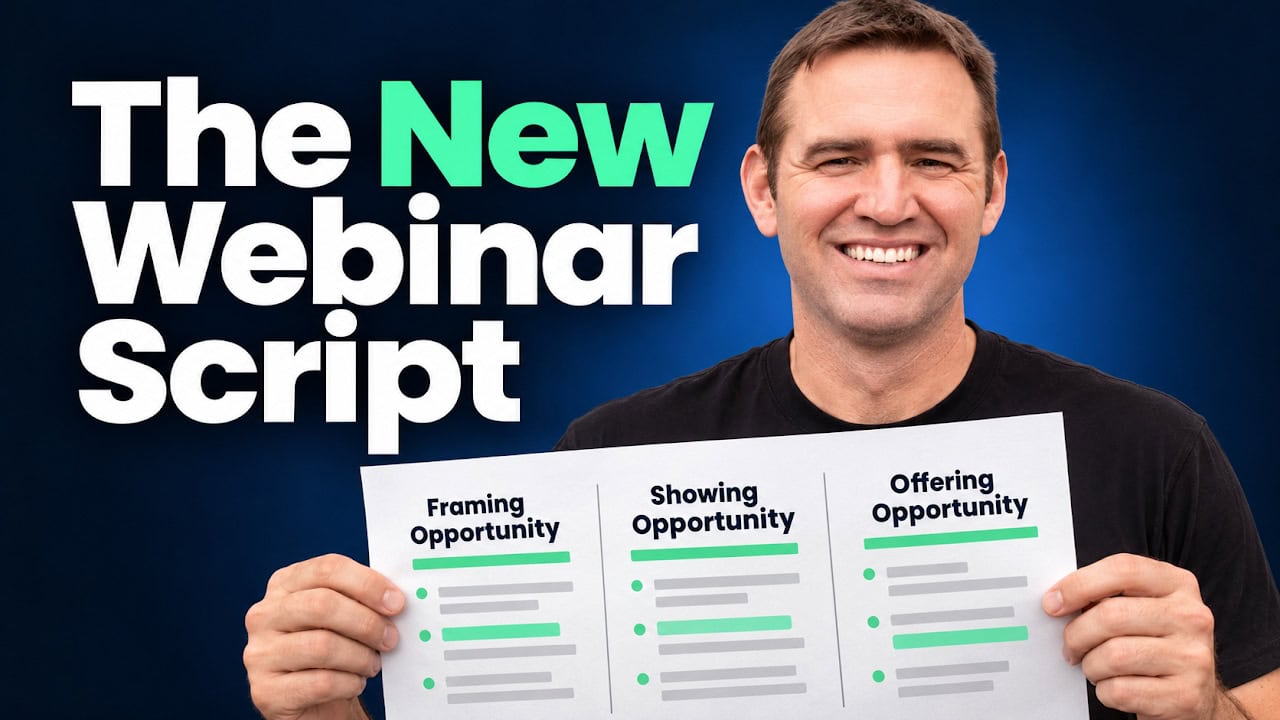
- The three-part presentation structure.
- On-screen demonstrations of building the sections with AI.
- What attendees should understand by the end.
The demonstrations give people something concrete to look forward to. They’ll see the process, rather than only hear an explanation of it.
I move through these preview slides quickly. Each introduces an idea that the presentation will return to and explain.
How Do You Use Proof and Address Objections in the Opening?
Use proof to support the point you’re making, and address concerns that could prevent someone from considering your approach. Both help establish the context for the teaching.
A testimonial should do more than occupy a slide. It should make a particular explanation or claim more believable.
If I’m discussing the webinar structure, I use a relevant example of someone applying that structure. If I’m explaining the creation process, I use an example connected to that process.
The proof stays attached to the point. It doesn’t interrupt the presentation with a separate collection of praise.
I also identify objections that need attention early. In my market, those include concerns that webinars are outdated, technically difficult, or likely to feel like a long sales pitch.
Someone holding those concerns may not be ready to listen to a detailed explanation of webinar structure. First, I need to explain why the approach is worth considering.
For me, the central reason is trust. A presentation lets people see you, hear you, and experience how you explain your work.
I also address the concern about aggressive selling. I want people to understand that a webinar can teach something useful and make an offer while remaining transparent and professional.
I call my approach a “demo webinar”: a demonstration of how you help clients, followed by an offer to help others pursue the same kind of outcome.
That description gives people a clear picture of what I mean. It also distinguishes the approach from a webinar experience they may have disliked.
For your own opening, ask which concerns would stop attendees from taking your method seriously. Address those while explaining why the opportunity matters.
How Do Desires, Difficulties, and Discovery Connect the Opening?
Use desires, difficulties, and discovery to move from what the audience wants to why your approach deserves attention. These are the 3Ds I use to help frame the opportunity.
Desires come first. Explain the result people want and why the approach you’re discussing could matter to them.
In my presentation, I talk about using webinars to build trust and attract clients. I want people to understand the appeal before discussing the work involved.
Then acknowledge the difficulties. For my audience, those include deciding what to say, how much to teach, how to structure the presentation, and how to create the supporting materials.
I describe the research, slides, emails, and page copy because those are recognizable parts of putting a webinar together. The audience can see that I understand what makes the process feel overwhelming.
Then introduce the discovery. Explain the different or better way you’ve found to address those difficulties.
In my example, that’s combining a professional webinar structure with AI to help with the creation process. The discovery connects back to both the desired outcome and the work that has been getting in the way.
This gives the opening a progression. You’re helping people understand what they want, what makes it difficult, and why you’re presenting this particular approach.
How Do You Establish “Why You?” Before the Main Teaching?
Establish your authority through relevant experience, a personal connection, and a discovery story that explains how you arrived at the approach. Keep those elements connected to the subject you’re teaching.
In my opening, I briefly introduce my experience working on webinars. I also add a personal note about being a father, husband, and sports fan.
That personal touch helps people get to know me. It sits alongside the professional context rather than becoming the main subject.
Then I explain what I noticed through my work and how that shaped the approach I’m sharing. That’s the purpose of the discovery story.
In this example, I discuss observing call-booking presentations, testing a structure, and developing AI-supported frameworks around it. The story gives people context for why I’m teaching that process.
The opening also connects to a demonstration later in the presentation. When I can show the process working, the audience has something concrete to evaluate.
In the longer presentation discussed in the video, I devote roughly the first 20 to 25 minutes to framing the opportunity. That includes explaining the approach, addressing concerns, and establishing relevant context.
That timing describes this presentation, not a reason to stretch every introduction. I keep the slides moving and use each part to answer a question the audience needs resolved.
Before you move into your main teaching, look at whether attendees understand why the approach matters and why you’re the person to explain it. A clear headline starts that process; a well-structured introduction carries the promise forward.
If you already run a webinar and want to know where it’s losing clients, request a complimentary Webinar Conversion Checkup: https://jonschumacher.com/checkup. If you’re planning one, book a Fast Start Strategy Session: https://jonschumacher.com/webinar-schedule.
About Jon
Jon Schumacher is a webinar consultant with 12+ years of experience and 300+ private clients across 30+ industries. He helps established coaches, consultants, advisors, and service businesses selling $3,000+ offers use webinars and VSLs to book qualified calls and win high-ticket clients.