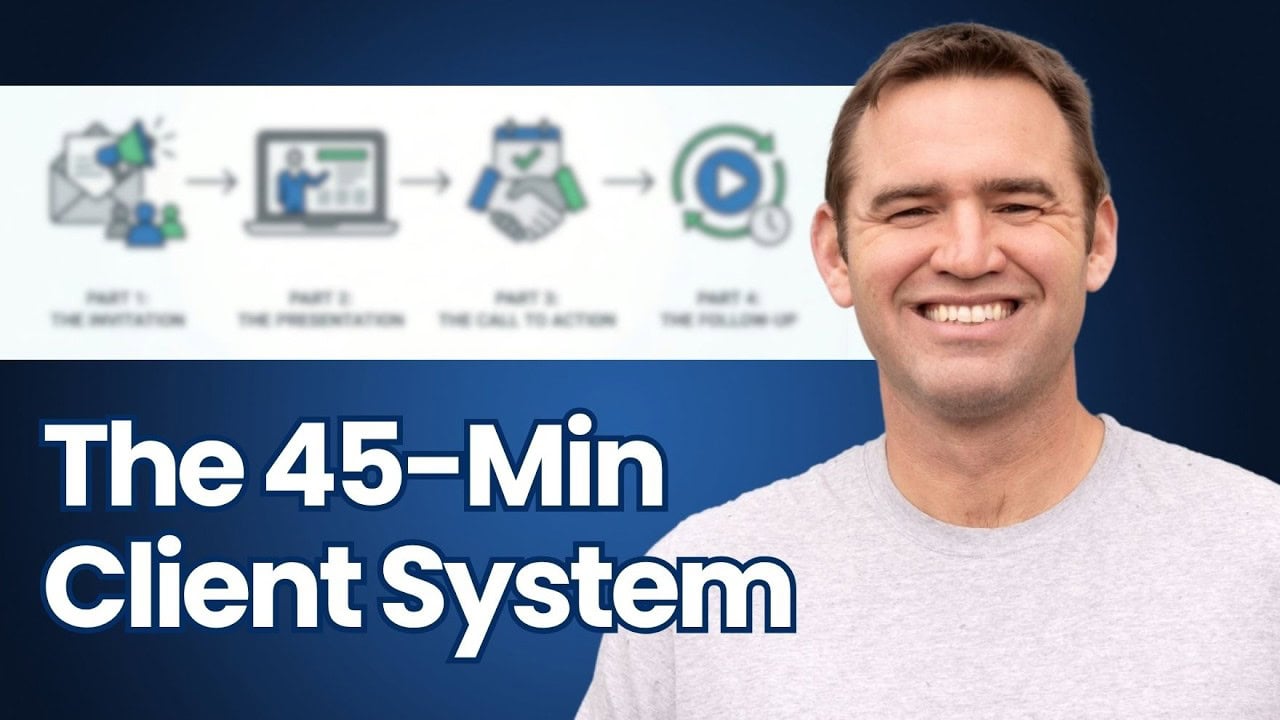
Consultants and advisors can use webinars to invite their existing audience into a presentation that explains their approach, addresses concerns, and offers a useful next conversation. I organize that process into four parts: the invitation, the presentation, the call to action, and the follow-up. Together, they create a system you can reuse rather than treating each webinar as a separate project.
If you already have an email list or a social following, a webinar gives you a proactive way to invite those people to learn about your work. Some may be interested in your services but haven’t yet taken the step of speaking with you.
This is the type of system I use with consultants, coaches, and financial advisors. The presentation helps people understand your methods before they enter a conversation about becoming a client.
Here’s how the four parts fit together.
1. Invite People From Your Email List or Network
Start by inviting people who already have a connection to your business. Your email list or social network gives you an audience to approach, whether the presentation will be live or recorded.
Email is my preferred starting point. In the example discussed in the video, I’m working with a financial advisor who has an email list we can invite to his presentation.
I use a five-part invitation sequence for my webinars and those I help clients and partners put together. The point is to give people enough opportunities to hear about the presentation and decide to attend.
The emails can sound like you. They don’t need to be tricky or manipulative.
For a live presentation, I put particular emphasis on communicating as the event gets closer. Sending an invitation once and assuming everyone has seen it leaves a lot to chance.
In the video, I also mention LinkedIn events as another invitation route for someone with a network there.
The first part of the system is straightforward: make an invitation. Before deciding how to deliver the presentation, identify the audience you can ask to watch it.
2. Deliver a Presentation That Builds Trust in Your Approach
The presentation should help people understand your central idea, see why it matters to them, and recognize why you could be the person to help. I call this framing the opportunity.
For this kind of live webinar, I like a presentation of around 45 minutes. The goal is to lead into a call invitation, where you can continue the conversation about working together.
The presentation needs to establish three things:
- Why your approach or opportunity is worth considering.
- Why it applies to the attendee’s situation.
- Why you have the expertise to help.
That requires a clear central idea. What is different about your process, and what do people need to understand about it?
One advisor I discuss has a comprehensive, five-part retirement plan. His approach goes beyond investments, so the presentation needs to explain that broader process and why it matters.
We build up that idea early, walk people through it, and address concerns that might stop them from considering it.
The teaching supports that purpose. It helps people understand your approach rather than simply giving them a collection of information.
You can also use a recorded presentation. In the video, I describe a shorter version of roughly 25 to 30 minutes, with a more concise delivery.
The central job remains the same: frame the opportunity, address objections, and lead into a compelling next step.
I discuss both live and recorded options because the right fit depends on the business. The format serves the presentation; it doesn’t replace the work of getting the message right.
3. Offer a Named Call With a Clear Reason to Attend
Position the call as the logical next step after the webinar. Give it a name, explain what you’ll do together, and describe relevant incentives for attending.
For this type of webinar, I focus the closing invitation on the conversation. I avoid spending too long describing every feature and price point of the service before asking people to book.
The call needs its own value.
In the video, I credit colleague Brian Harris with the action plan call-to-action framework I’ve been using. The structure is to invite people into a named session where they can take the next step with your help.
The invitation should explain:
- What the call is called. Give people a specific session to request.
- What happens during it. Describe what you’ll work through together.
- Why attending is worthwhile. Explain the benefit of the conversation.
- What else is included. Mention relevant resources or an assessment offered with attendance.
Examples in the video include a book and an audit or assessment. These are ways to add value to the session, depending on what your business actually provides.
The important distinction is that you’re asking someone to take the next step. You don’t need to explain every part of the full engagement before they can consider speaking with you.
Qualification is still a separate part of the process. The video notes that there are ways to qualify people after they request a call; a booking by itself doesn’t establish that someone is the right fit.
The webinar prepares people for the conversation. Your sales process determines whether working together makes sense.
4. Follow Up With the Recording and a Call Invitation
Give registrants another opportunity to watch and book after the live presentation. Some won’t attend, and others won’t watch all the way through.
I use a three-day email follow-up sequence that features the recording and gives people an opportunity to request a call.
In this approach, there’s a defined window for watching the replay. The emails remind people that the presentation is available and give them a reason to make time for it.
The follow-up connects the same two actions as the live webinar: understand the approach, then consider a conversation.
It also gives you a way to continue communicating with people who registered but couldn’t join live. Their absence from the live room doesn’t tell you whether they’re interested in the subject or your help.
Keep the call invitation available alongside the replay. Someone who watches afterward should still have a clear way to take the next step.
The follow-up is part of the system from the beginning. Plan it along with the invitation, presentation, and CTA so the process continues after you finish presenting.
How Can You Reuse the Webinar System?
Reuse the invitation structure, presentation, call to action, and follow-up when they’re working for your business. You don’t need to start over every time you host a webinar.
In the video, I suggest running the presentation monthly or every other month. You might make adjustments over time or eventually develop a couple of presentations, but the underlying process can remain similar.
That means you can reuse:
- A similar invitation email sequence.
- The main presentation structure.
- The call invitation.
- The follow-up process.
This is especially relevant for a consulting or advisory firm looking for a manageable number of additional clients. The goal is to get the right people into a useful conversation about your work.
A presentation gives your audience a more deliberate opportunity to explore your approach. Repeating the process lets you make that invitation again without rebuilding the whole system.
The four parts work together: invite people to watch, explain your approach, give them a reason to book, and follow up with those who need another opportunity. That’s the call-booking webinar system I want you to consider for your business.
If you already run a webinar and want to know where it’s losing clients, request a complimentary Webinar Conversion Checkup: https://jonschumacher.com/checkup. If you’re planning one, book a Fast Start Strategy Session: https://jonschumacher.com/webinar-schedule.
About Jon
Jon Schumacher is a webinar consultant with 12+ years of experience and 300+ private clients across 30+ industries. He helps established coaches, consultants, advisors, and service businesses selling $3,000+ offers use webinars and VSLs to book qualified calls and win high-ticket clients.